Precision Myofascial Therapy Clinic

Location: 3697 Park Ave, Ste 101
Ellicott City, MD 21043

The Velvet Lotus Massage Spa

Velvet Lotus Massage Spa is now Precision Myofascial Therapy Clinicunder the same owner you know and trust. We have transitioned to focus exclusively on specialized, results-driven Myofascial Release and no longer offer Swedish or Deep Tissue massage. All previously purchased Swedish massage packages will still be honored. As of 4/6/26, new clients may book Myofascial Release services only. Existing clients who still have remaining Swedish massage packages, may continue to book Swedish massage until their packages end. Thank you for your continued support, we look forward to helping you achieve lasting relief.

Precision Myofascial Therapy Clinic


Now Accepting HSA / FSA

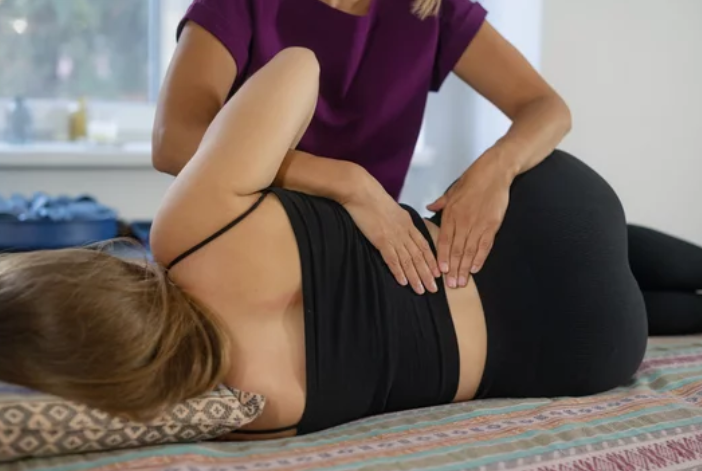
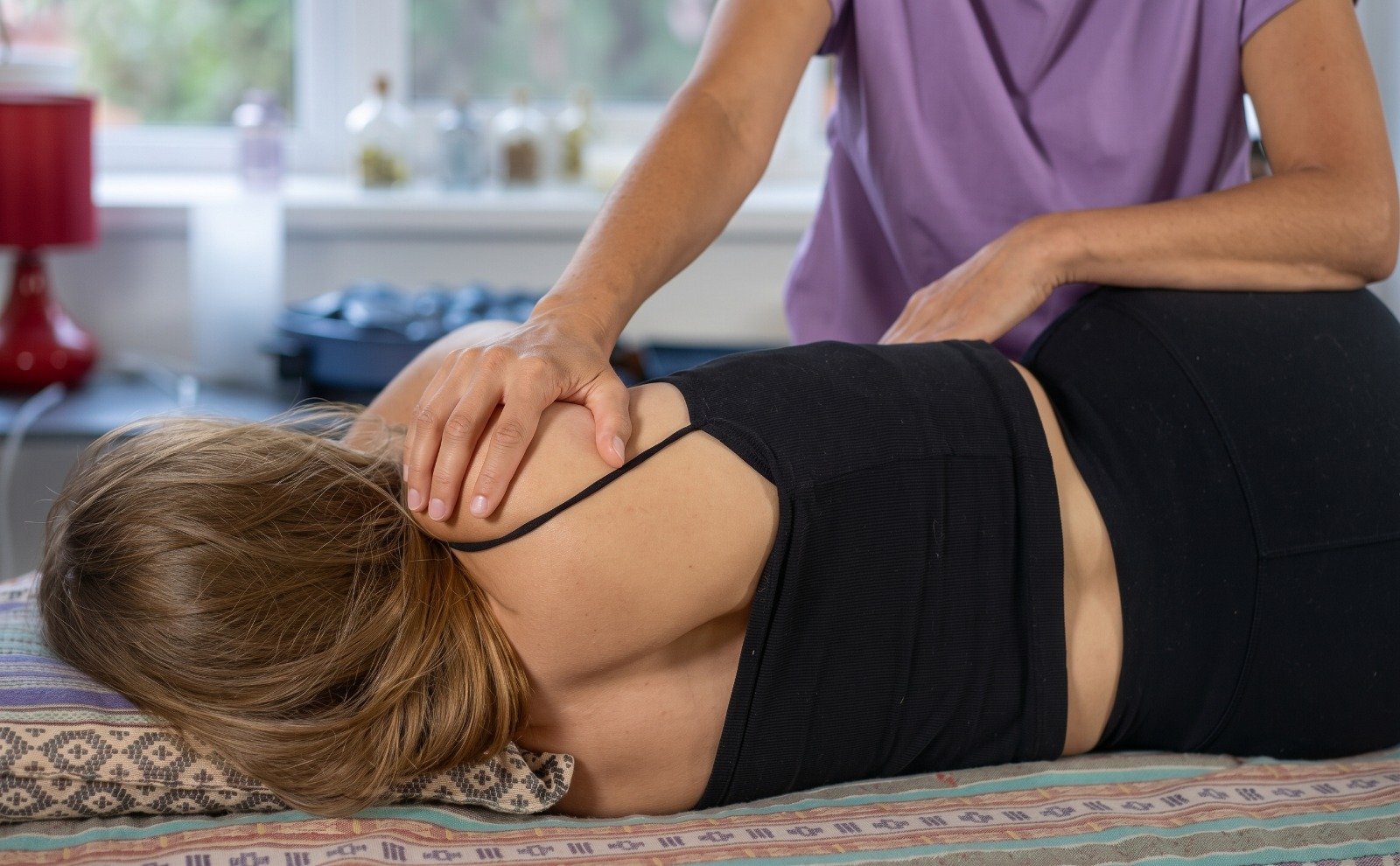
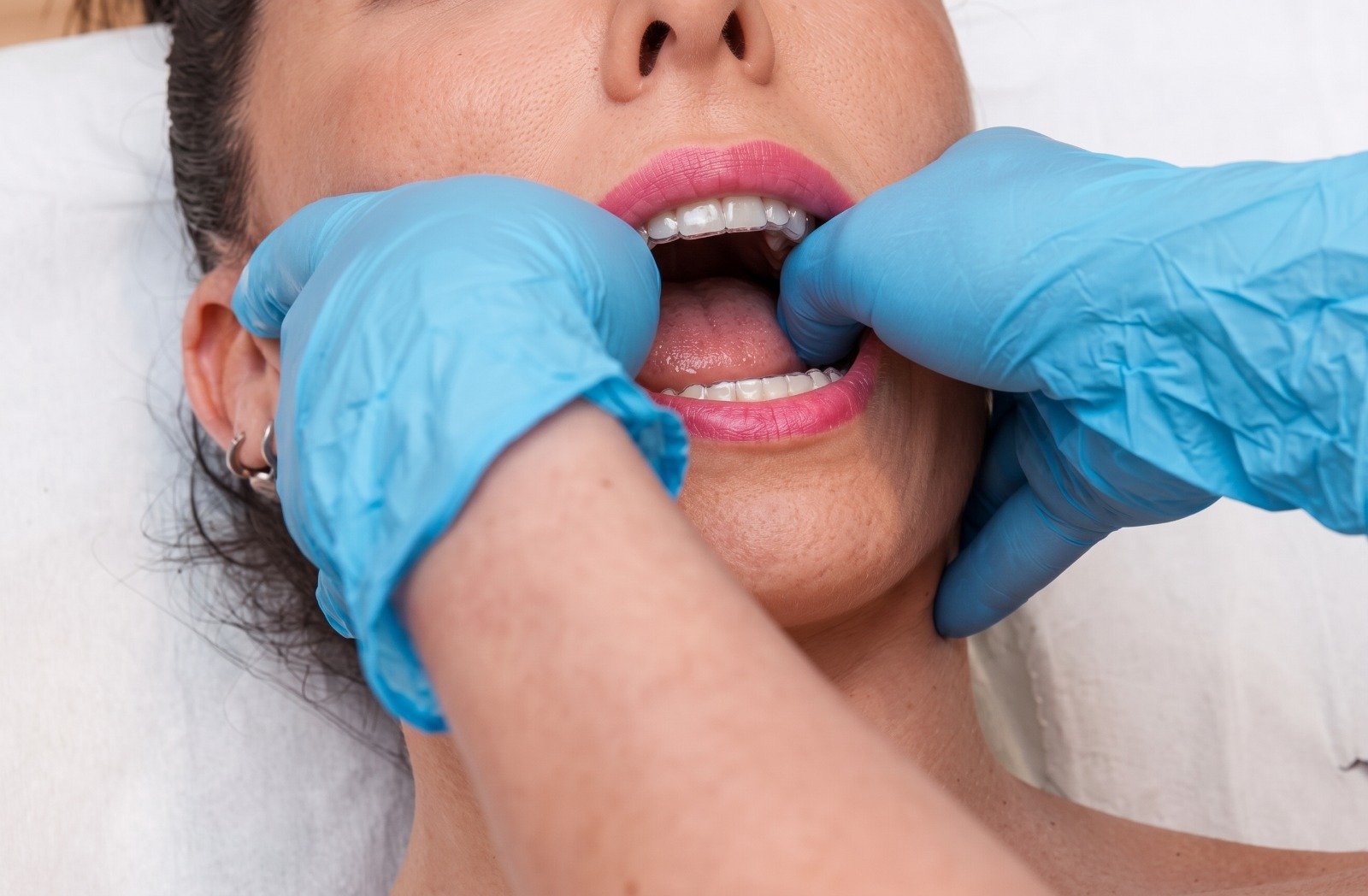
Clinical Myofascial Therapy Evaluation & Targeted Pain Resolution Treatment
Initial Assessment:   $180 | 90 Minutes

Your session includes:

Structural Mapping: A 360° postural analysis to identify the root cause of your pain.

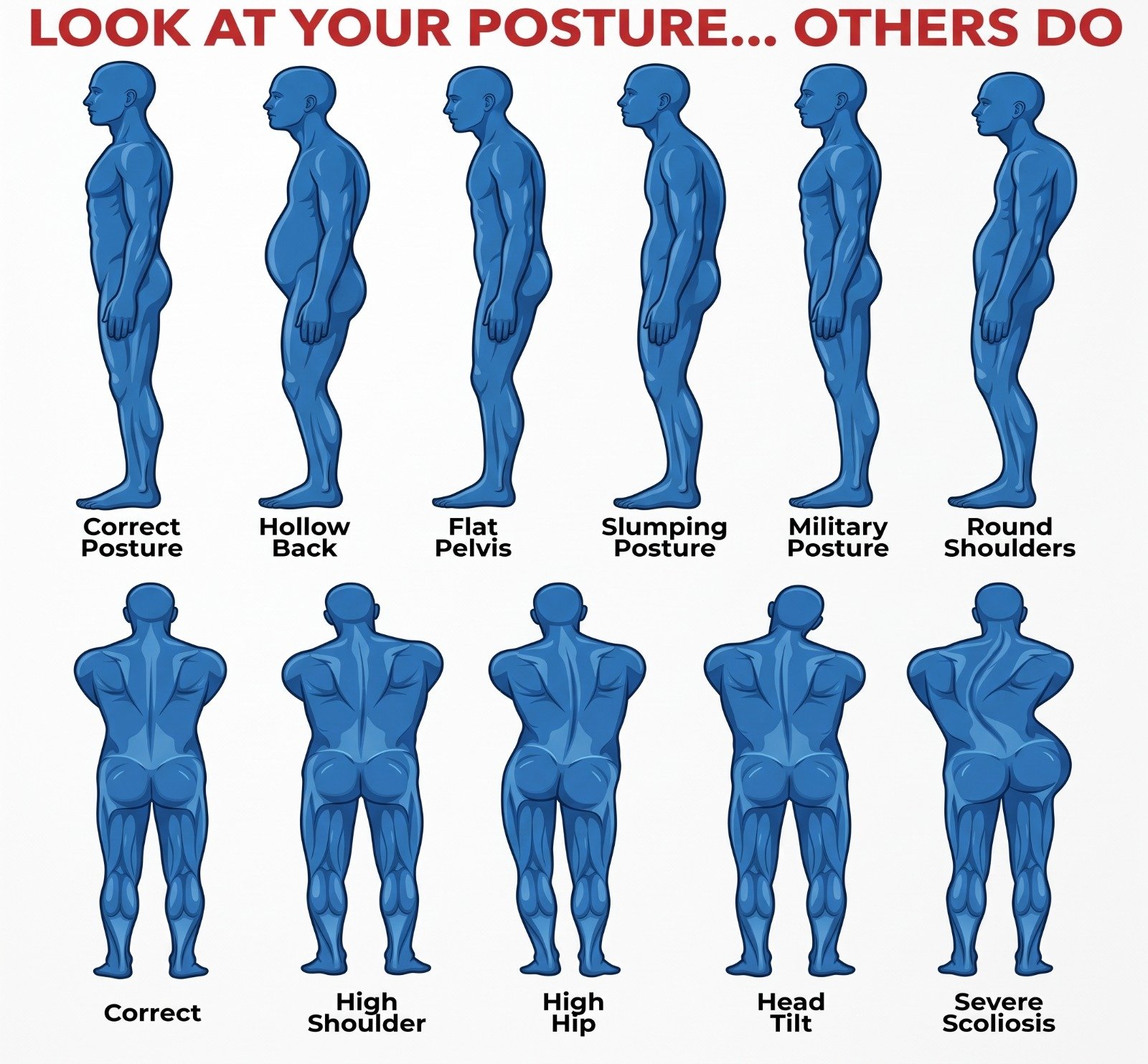
Pattern Discovery: Identifying the “holding patterns” (like hip hikes or tilts) driving your tension.
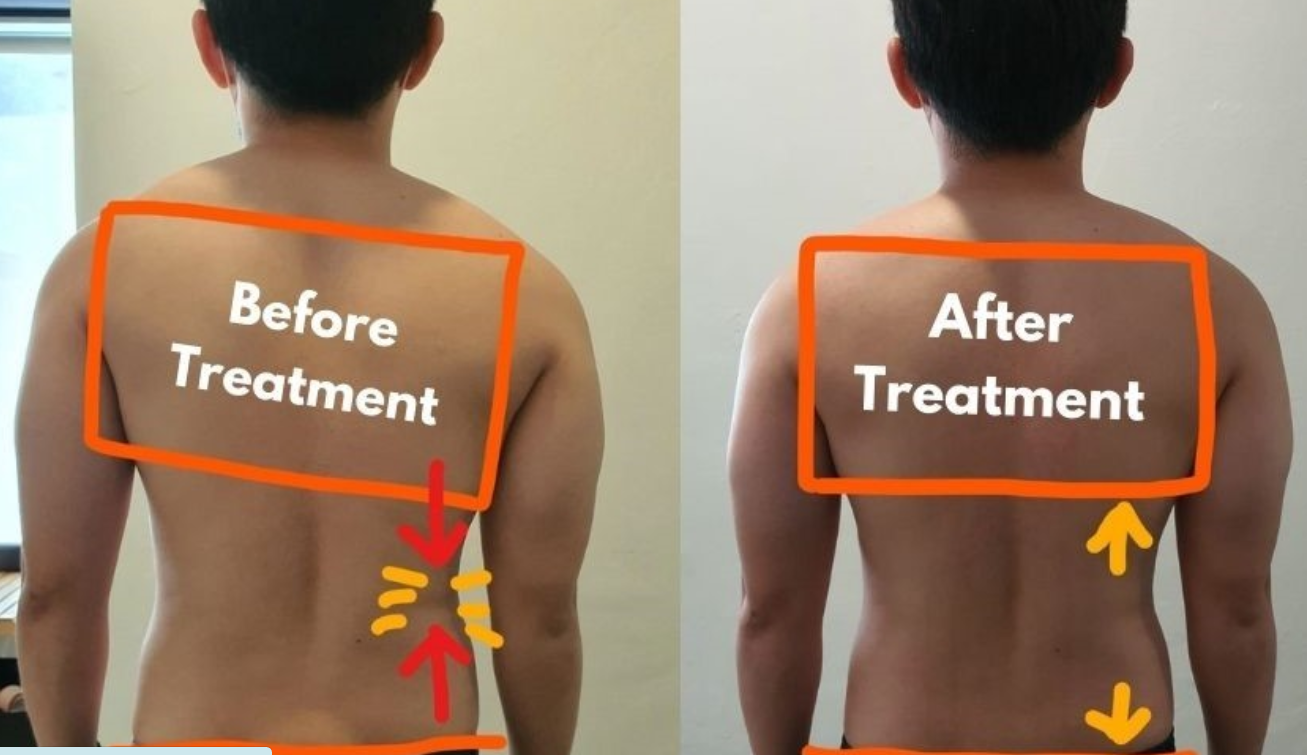
Targeted Treatment: A focused clinical intervention to reduce your primary pain patterns.


Precision Myofascial Therapy Clinic

Hi My name is Traviata “Maria”Raudales, Licensed Massage Therapist, #M06681. I am a Barnes certified Myofascial Release Specialist, with more than 5 specific certifications in Myofascial Therapy from the Pesi Institute, John Barnes, and Maria Alfieris,etc.  Precision Myofascial Therapy Clinic, our mission is to treat the root cause of chronic pain (not just the symptoms) by releasing fascial restrictions in the body to help you achieve balance and get back to the activities that you once enjoyed.

What is Myofascial Therapy? It Starts With How You Stand

Before we ever touch a knot, a tight shoulder, or a locked up hip, we look at posture. Here’s why that matters so much.

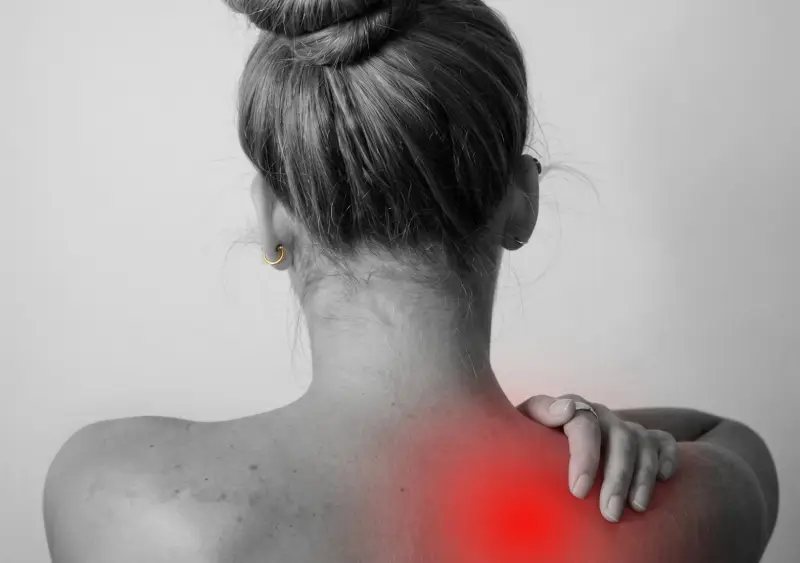
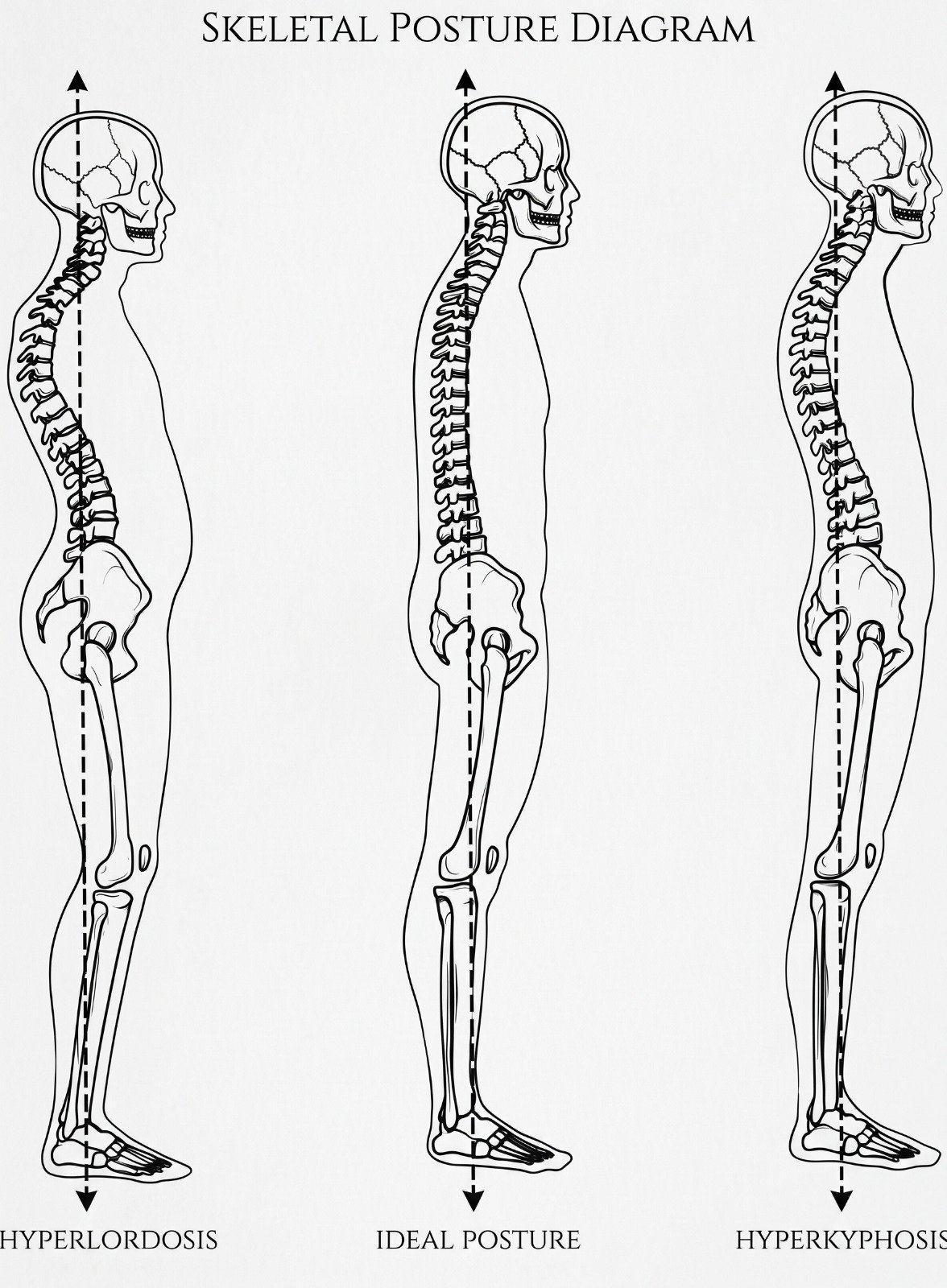
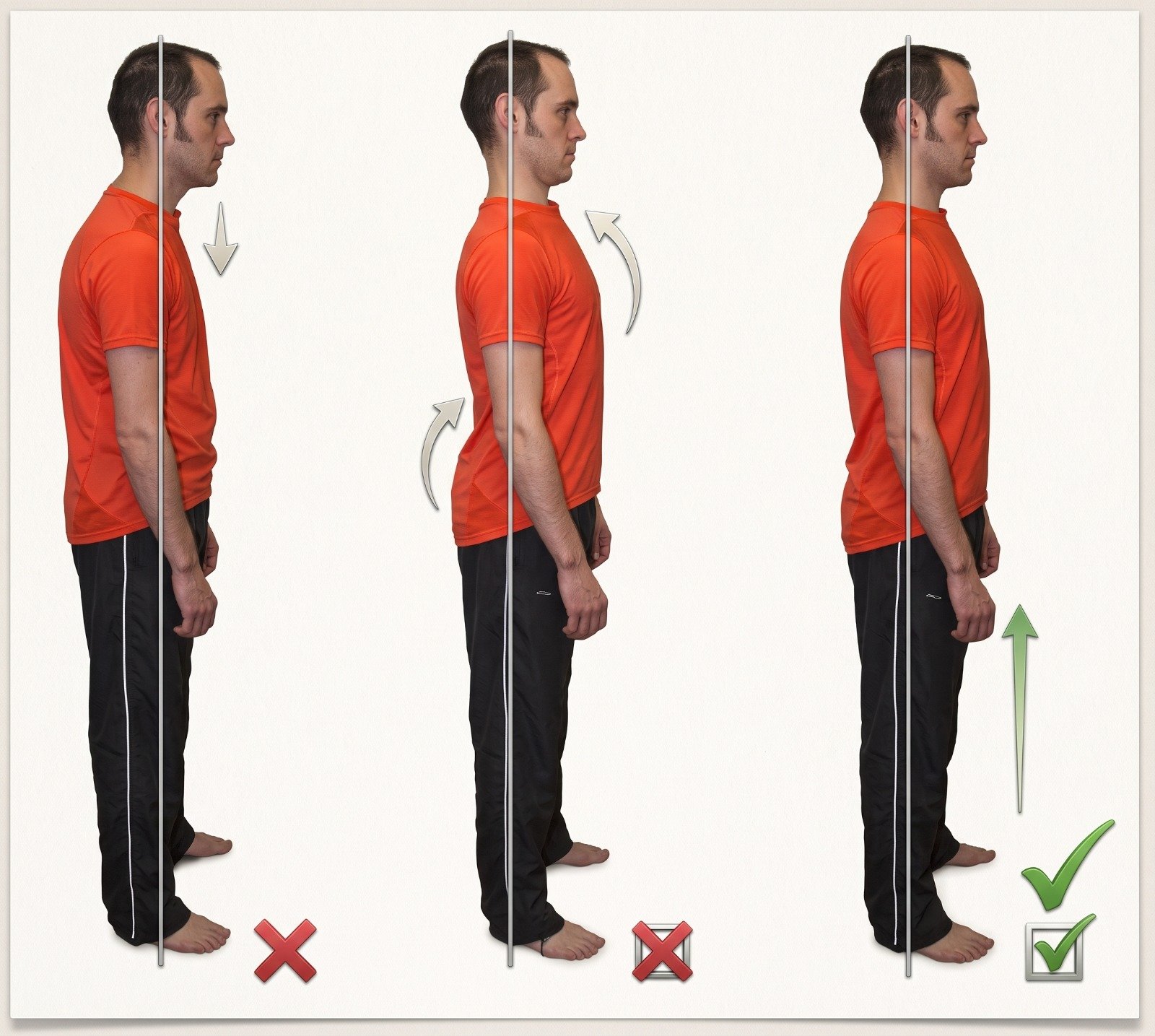
Your body is built to carry weight evenly through a balanced structure. When one hip sits higher than the other, when one shoulder rounds forward, when your head sits in front of your spine instead of stacked above it, your body doesn’t just let that happen passively. It compensates. Muscles on one side overwork to hold you upright. Fascia, the connective tissue wrapping every muscle, begins to thicken, shorten, and stiffen around the structures it’s compensating for. Over months and years, what started as a minor postural habit becomes a deeply embedded pattern of fascial restriction that generates pain, tension, and limited mobility, often in a completely different place than where the original imbalance started.

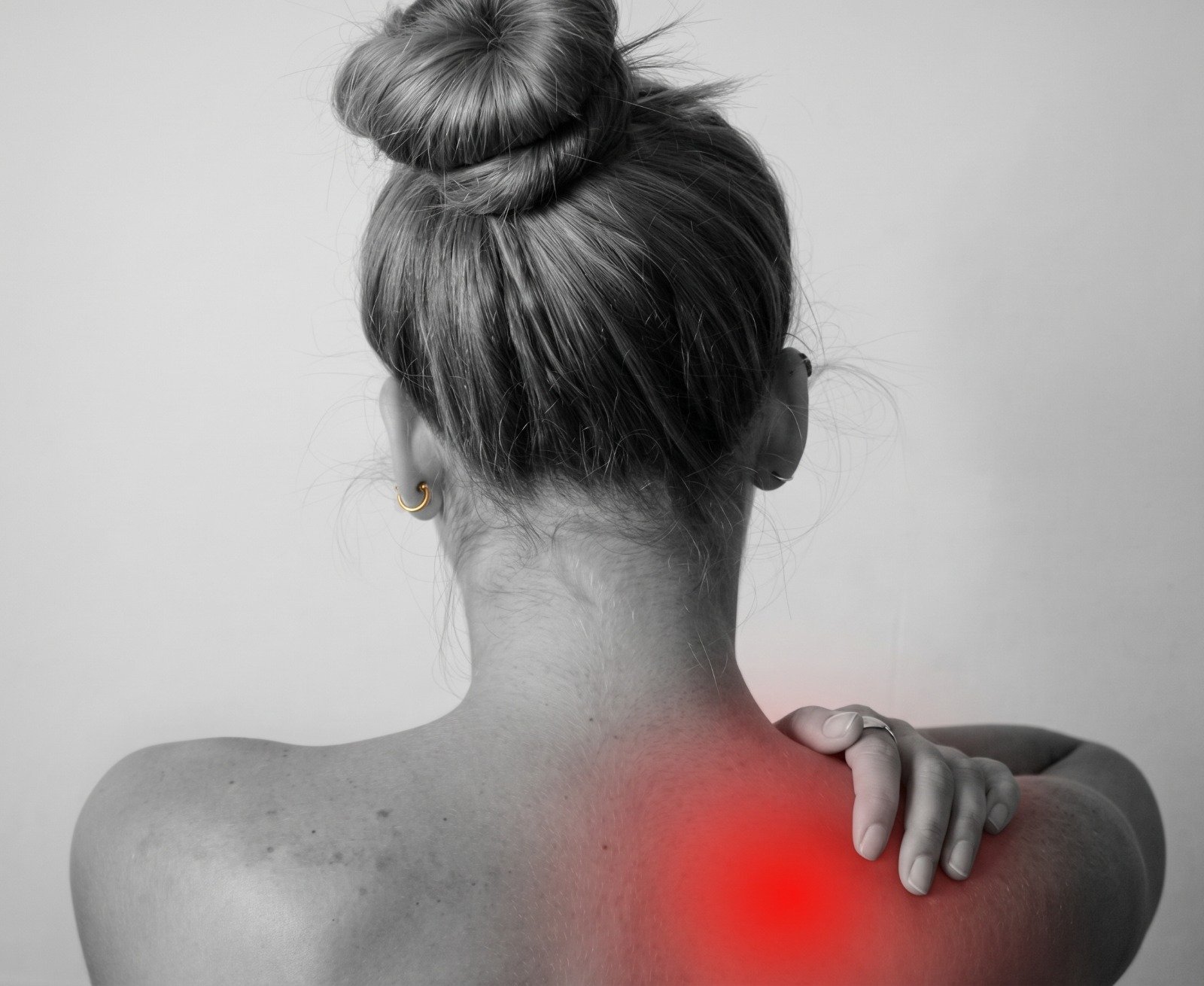
This is why someone can have a chronic shoulder ache that started in their hip, or a constant headache that’s actually being driven by tension in the upper back. The body is one continuous fascial system. A problem in one area has an impact on the entire body. With myofascial therapy, we get to the source of the restriction so that your discomfort does not keep returning.

The One Minute Assessment

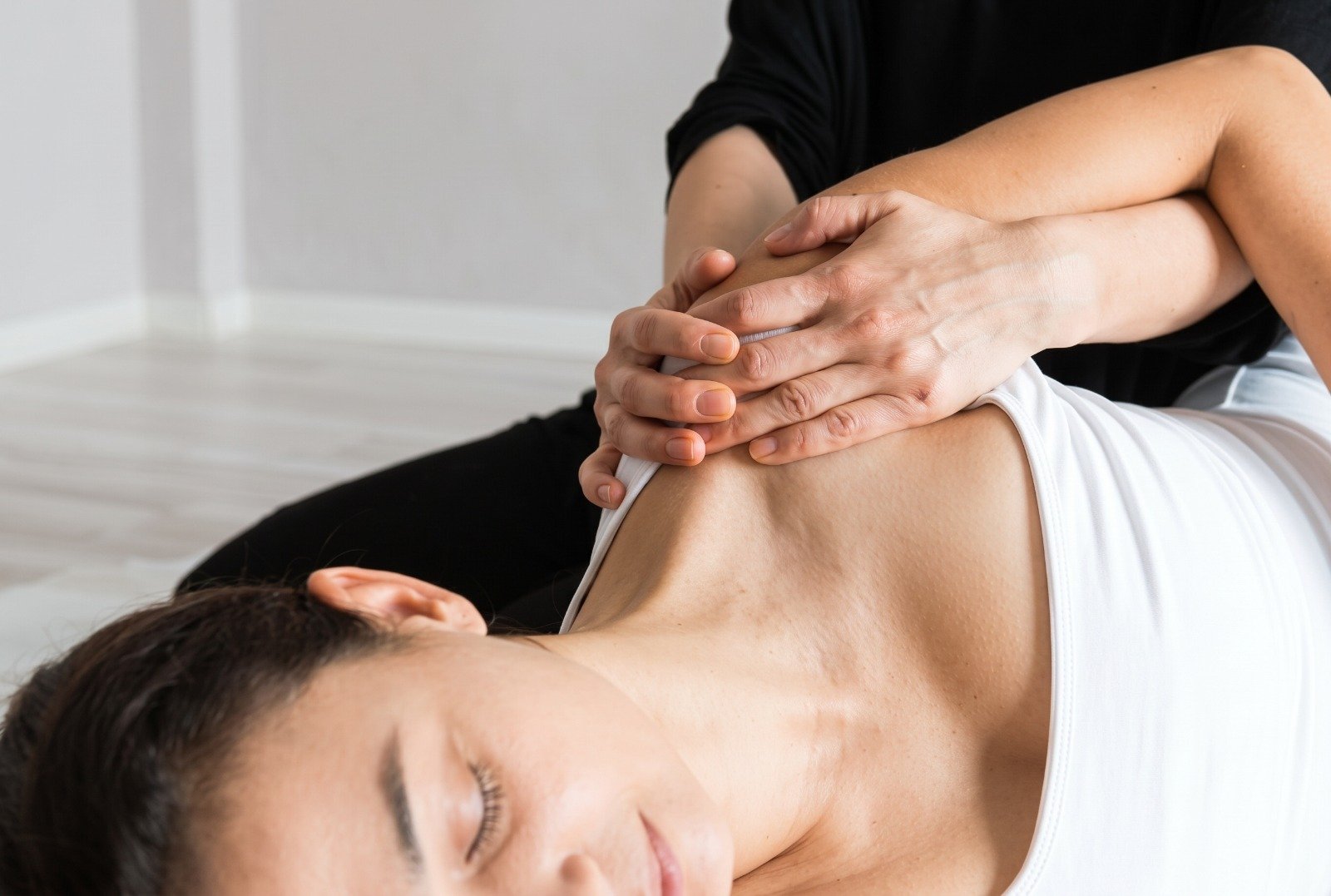
Before any treatment begins, we conduct a quick postural assessment, typically less than a minute, to identify exactly where your body is out of balance. We look at things like whether your hips, shoulders, and pelvis sit level, whether your head sits forward of your spine, whether one side of your body is doing more work than the other, and where compensation patterns are showing up.

This assessment tells us exactly where to start. Instead of guessing or simply working wherever you say it hurts, we can see the actual structural imbalance driving your symptoms and build a treatment plan around it. As we work through your Treatment Track, we reassess regularly to track how your posture is shifting and to know what to address next.

What Are “Knots,” Really?

Most people have had a massage therapist dig into a tight spot and call it a knot. The medical term for this is a myofascial trigger point, and it’s worth understanding what that actually is, because it changes what kind of treatment will resolve it.

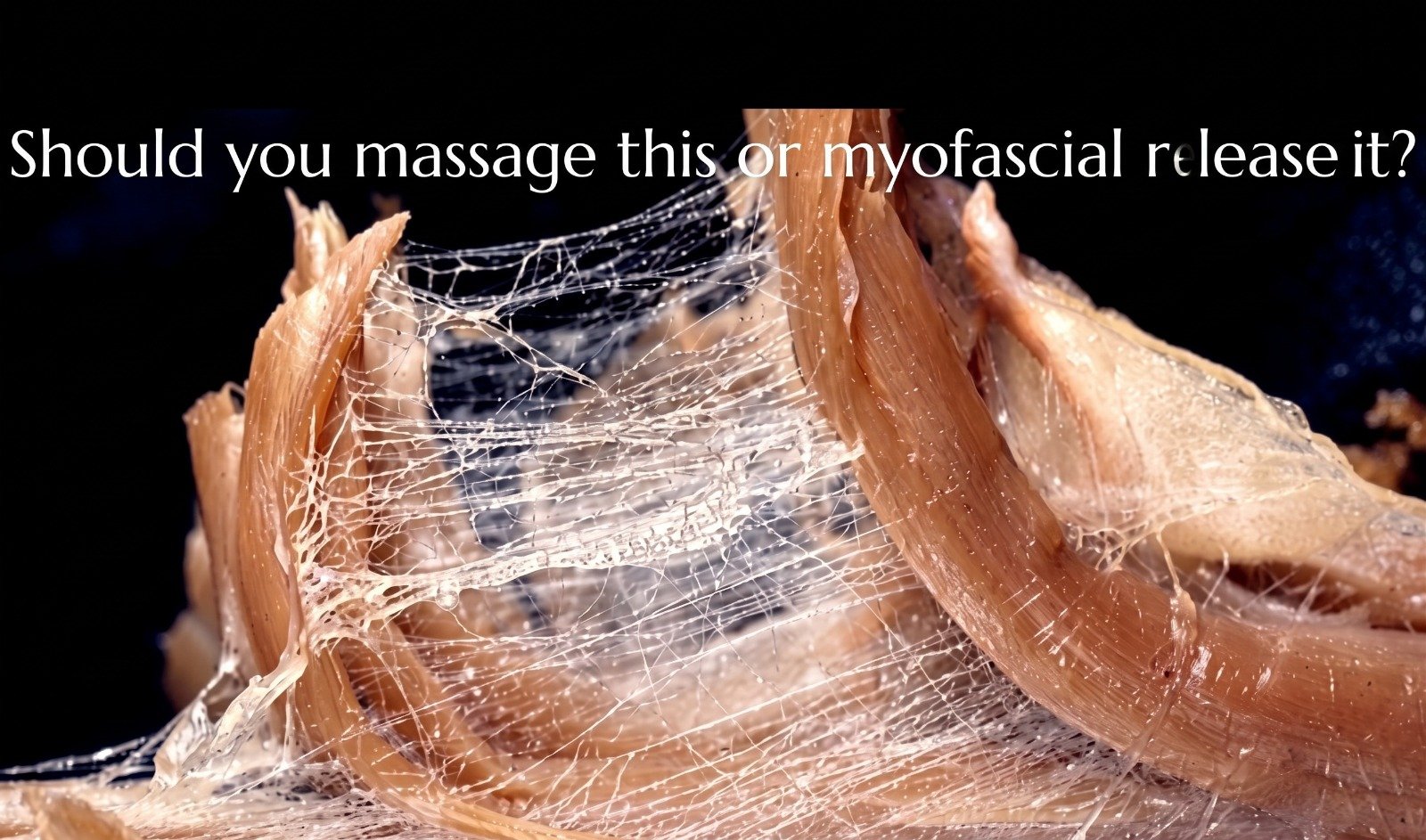
A muscle knot is not purely a muscle problem. It involves both the muscle fibers and the fascia surrounding them, since fascia wraps every individual muscle fiber, every bundle of those fibers, and the muscle as a whole. When a knot forms, both the muscle tissue and its fascial casing are involved in that tight, restricted, often painful nodule you feel under the skin. This is where the term “myofascial” actually comes from, myo for muscle, fascial for the connective tissue surrounding it.

Poor posture is one of the most common contributors to knot formation. When a muscle is chronically held in a shortened or overworked position due to postural imbalance, the fascia thickens and stiffens around it in response, and the muscle fibers underneath develop the tight, contracted bands that create the knot you feel.

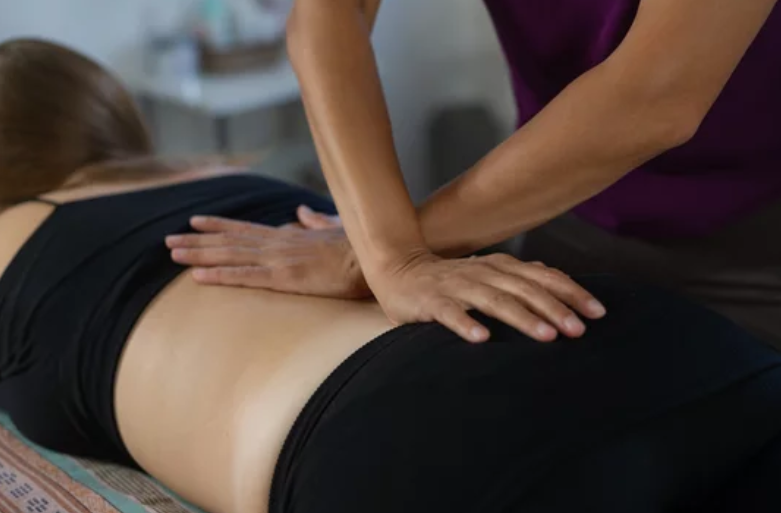
This is exactly why a knot can feel temporarily better after a massage and then return within days. If the massage relaxed the muscle fibers but didn’t release the fascial component wrapped around them, and didn’t address the postural pattern that caused the knot in the first place, the knot will simply reform. Myofascial Release is designed to address both. It engages the fascia directly through slow sustained pressure without oil, and because we identify the postural imbalance driving the knot through our assessment, we can work on resolving the actual cause rather than just the tight spot itself.

Why This Requires More Than Surface Pressure

Swedish massage, deep tissue massage, and sports massage all work primarily on the superficial muscle layer. They can temporarily relax the muscle fibers involved in a knot, but the oil or lotion used in these techniques creates a surface glide that prevents the therapist from sinking into and releasing the fascial component. The knot relaxes for a few days and then reforms, because the postural pattern causing it and the fascial restriction maintaining it were never addressed.

Despite its name, deep tissue massage does not reach the deep fascial layer either. The oil that allows the therapist to apply heavy pressure while moving across the skin is the same thing preventing that pressure from sinking into the connective tissue beneath the muscle. Deep tissue does not work deeply into the fascia.

Myofascial Release uses no oil. Sustained pressure without surface glide allows the fascia to be engaged directly and held until it genuinely releases, layer by layer, rather than being temporarily compressed and springing back. As each layer releases, access opens to the next, addressing restrictions that have built up over months or years. Combined with the postural assessment that tells us where the imbalance actually originates, this allows us to treat the cause rather than chase the symptom session after session.

This work also affects more than just the tension you feel. Restricted fascia compresses the blood vessels and lymphatic channels running through and around it. When that restriction releases, circulation and lymphatic drainage improve, not because the tissue was stimulated temporarily, but because a structural obstruction was removed.

The Importance of Drinking Enough Water After your Myofascial Therapy Session

After your myofascial therapy session you Must drink more water than what you would normally drink (following your session and the next day). Once you leave your myofascial session, you may feel some discomfort for one to two days after your session. This discomfort resembles the feeling of a good workout that you may have had at the gym. What is happening is that your body has been out of balance for a long time, so there will be some discomfort until your body gets back into balance. The reason why we recommend that you drink plenty of water after your session, (and even the next day) is because toxins were released into your bloodstream during your myofascial session and the water will help to flush out your system so that you don’t experience as much post-session discomfort.

We Find the Source Before We Treat It

A restriction in one area is rarely isolated. It is almost always influencing and being influenced by structures elsewhere in the body. A tight psoas pulling the pelvis out of alignment affects everything above and below it. Fascial restriction in the thoracic spine limits shoulder mobility even when the shoulder itself is healthy. Compression at the base of the skull drives headache patterns that feel like they originate in the head but are being generated from the neck and upper back.

This is why every treatment begins with the postural assessment, followed by deeper structural mapping that tells us where tension is being stored across fascial layers and what is actually at the root of your symptoms. We don’t chase pain. We find its source and we treat it there.


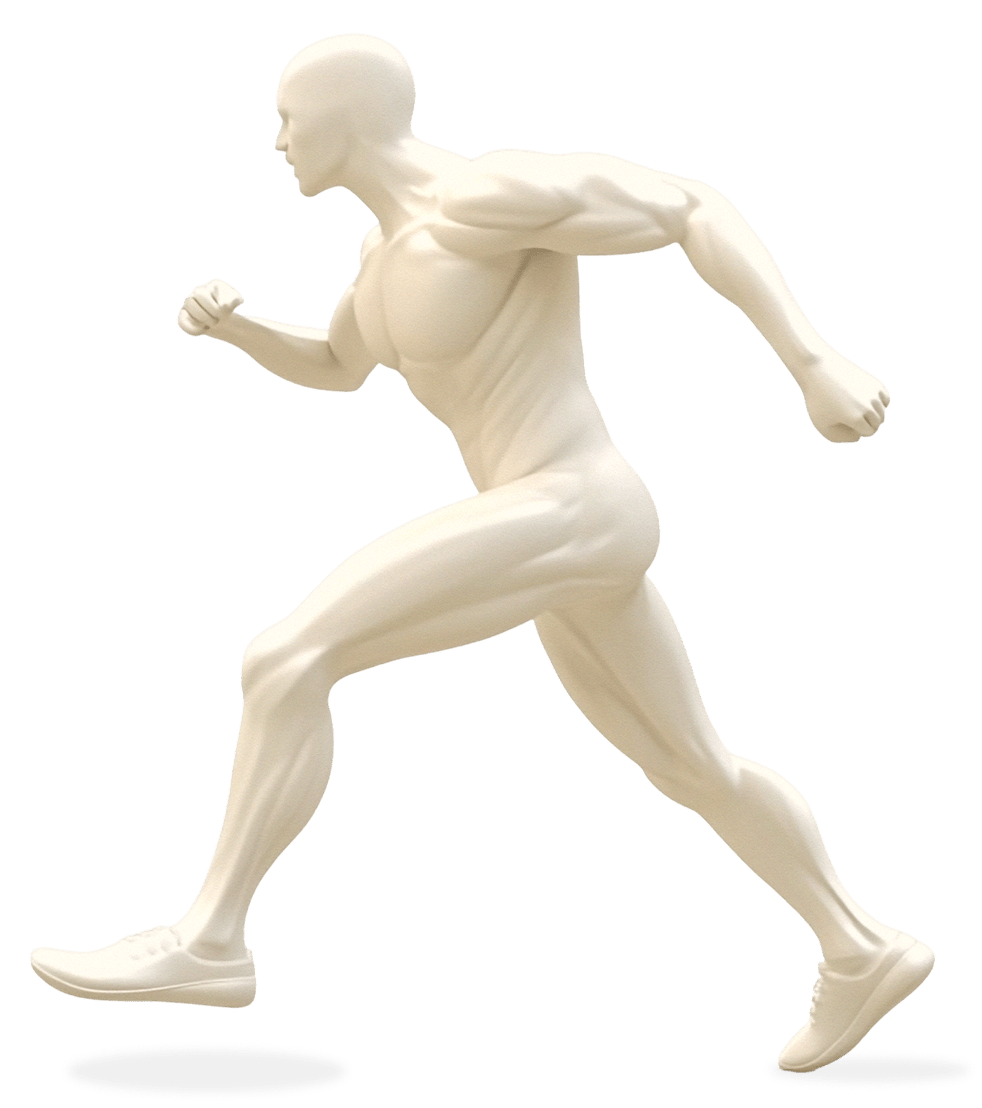
Myofascial Therapy FOR ATHLETES

Myofascial Release for Athletes | Improve Mobility, Performance & Recovery

The Difference Between a Good Athlete and a Great One Is Often Hiding in the Fascia.

You have put in the work. The training hours, the coaching, the recovery protocols. But somewhere in your body there is a physical ceiling you cannot break through. A restriction that keeps expressing itself no matter what you do. Your coach sees it in your mechanics. You feel it in your movement. And nothing you have tried has made it go away permanently.

Often, the starting point isn’t even the muscle. It’s posture, and the postural compensations your training has built into your body over years without you realizing it. A hip that sits slightly rotated. A shoulder that’s chronically internally rotated from years of training in flexion. These small imbalances create big fascial restrictions over time, and they are exactly what our quick postural assessment is designed to catch before we ever start treatment.

Here is something most athletes have never been told. Deep tissue massage, Swedish massage, and sports massage are relaxation methods. They were designed to relax the nervous system and temporarily reduce muscle tension, however none of these techniques are designed to create structural change in the body, and structural change is what actually moves the needle on your performance.

Deep Tissue Feels Productive. It Is Not the Same as Progress.

Deep tissue massage is a good tool for relaxation, however, it cannot reach the fascial layer beneath the muscle, which means it has no ability to correct the structural restrictions actually limiting your hip depth, your shoulder mobility, your stride length, or your rotational power. The relief you feel afterward is real, but it is relief from surface tension, not a resolution of the mechanical limitation underneath it. That limitation is still there the next time you train, which is why the same tightness, the same compensation pattern, and the same performance ceiling show up again and again no matter how many sessions you book.

What Structural Change Actually Means

Structural change means the connective tissue itself is reorganizing. It means a hip that could not achieve depth without compensating now moves through that range on its own. It means a shoulder that could not reach overhead without your lower back arching now gets there cleanly. It means the compensation pattern your coach has been correcting for two years stops needing to be corrected because the tissue causing it has actually released.

This is what Myofascial Release does that deep tissue, Swedish, and sports massage cannot. Using slow sustained pressure without oil, we engage the fascial system directly, progressively releasing the layers of restriction that have built up through years of training, old injuries, and the postural patterns your sport has reinforced.

Faster Recovery After Heavy Training

After an intense training session, the fascial system undergoes its own stress response alongside the muscle tissue. Heavy loading and repetitive movement create micro restrictions and increased tension within the fascial layers surrounding the working muscles. When those restrictions are not addressed, they compound over time. This is the deep persistent soreness that does not resolve with foam rolling, because foam rolling never reaches the fascial layer where the tension is actually held.

Myofascial Release releases the connective tissue tension that builds in the layers surrounding the working muscles. When the fascial system is free from compressive restriction, blood flow and lymphatic circulation through the treated region improve because the vessels and channels carrying them are no longer compressed. The practical result is measurable: training sessions that previously left muscles sore for three or four days begin resolving in one or two.

The Tight Psoas and What It Is Actually Costing You

The psoas originates on the lumbar vertebrae, runs through the pelvis, and inserts on the inside of the upper femur. When the fascia surrounding it becomes restricted, often from years of repeated hip flexion under load or a postural pattern like anterior pelvic tilt, it pulls the lumbar vertebrae forward, tilts the pelvis anteriorly, and limits hip extension.
For the weightlifter or powerlifter, a fascially restricted psoas prevents full squat depth, forcing the body to butt wink, shift load to the lumbar spine, or collapse the knee inward. Release the psoas fascia and the depth comes naturally.

  • For the sprinter or runner, a restricted psoas shortens stride length on the affected side by limiting hip extension during push off. Release it and the stride opens, the push off becomes more powerful, and the asymmetry resolves.
  • For the soccer player or basketball player, a fascially restricted psoas limits explosive lateral hip opening and is frequently behind recurring groin strain.
  • For the cyclist, the psoas chronically shortens from sustained hip flexion on the bike. Off the bike it cannot fully lengthen, creating anterior pelvic tilt and lumbar compression that affects every other movement pattern.

The Shoulder That Won’t Reach

For the overhead athlete, the pitcher, the volleyball player, the swimmer, the CrossFit athlete chasing a full overhead squat, shoulder mobility is everything. The shoulder sits at the top of a fascial chain running from the thoracic spine through the pectorals, the lats, and the rotator cuff. A baseball pitcher with a fascially restricted lat cannot fully externally rotate the throwing shoulder and compensates through the elbow and lumbar spine, exactly the pattern behind so many pitching injuries. A swimmer with thoracic fascial restriction compensates through the neck and lumbar spine to generate rotation the thoracic spine should be providing.

The Hip That Won’t Turn Out

For the martial artist, gymnast, Brazilian jiu-jitsu athlete, and dancer, hip external rotation is fundamental. Fascially restricted adductors prevent the hip from externally rotating, forcing compensation through lumbar rotation and the knee. 

The Thoracic Spine That Won’t Rotate

For the golfer, thoracic rotation is the engine of the swing. Restriction forces rotation from the lumbar spine and shoulders instead, leaking power at every compensatory joint. For the tennis player, the same restriction shifts power generation to the arm, a primary driver of tennis elbow.

The Ankle That Won’t Dorsiflex

For the basketball player, CrossFit athlete, and weightlifter, ankle dorsiflexion is the foundation of every squat and landing. Restricted calf and Achilles fascia forces the heel to rise in a squat and the knee to collapse on landing.

Care Built Like Your Training Program

Our Treatment Tracks are structured in defined phases, beginning with the postural assessment, then reducing immediate restriction, then progressively working through deeper fascial layers, and ultimately restoring structural balance. For athletes in heavy training cycles, twice weekly sessions in the early phase accelerate results significantly.

This is not deep tissue massage. This is not sports massage. This is the work that actually changes what your body can do.


FOR SCOLIOSIS

Scoliosis Does Not Have to Mean a Lifetime of Pain and Limitation.

If you have scoliosis you already know what it feels like to carry a body that is working against itself every single day. Chronic muscle fatigue on one side that never fully recovers. Tightness that builds through the day. Postural asymmetry that affects how you carry yourself in every activity.

Your Posture Is Already Telling the Story

Scoliosis is, fundamentally, a postural and structural condition, which is exactly why our postural assessment is such an important starting point for scoliosis clients. The lateral and rotational curvature of the spine forces the entire fascial system to adapt around it. On the concave side of the curve, fascia becomes chronically compressed and shortened. On the convex side, it’s chronically stretched and overloaded, working constantly to stabilize against the pull from the other side. Our assessment maps exactly how your particular curve is showing up in your posture, so we know precisely which side needs lengthening work and which side needs the overloaded tissue addressed.

Over years these asymmetrical patterns become deeply embedded across multiple layers of connective tissue. This is why conventional massage and stretching provide such limited relief. Swedish massage works at the skin and superficial muscle layer. Deep tissue massage, despite the name, works within the muscle layer and cannot access the fascial system that has reorganized around the curvature.

How Myofascial Release Addresses Scoliosis

Myofascial Release systematically releases the fascial restrictions built up around the curvature. For a client with a right thoracic curve this means releasing fascial compression along the right side of the thoracic spine and rib cage, releasing the compensatory tension in the left lumbar region, addressing the fascial chain through the hips and pelvis, and working into the cervical and cranial fascia where the upper compensatory curve generates chronic neck pain and headaches.

The result is not a structural correction of the bony curvature. The result is a body that moves with significantly less effort and pain because the fascial system is no longer amplifying the mechanical disadvantage the curvature creates.

You do not have to accept that scoliosis means constant pain. You just need treatment that understands what is actually driving it.


FOR CHRONIC HEADACHES AND MIGRAINES

What If Your Headaches Are Not a Head Problem?

If you have been living with chronic tension headaches or debilitating migraines you have probably worked through the list: medication, adjustments, conventional massage, stress management. Some of these help temporarily and none of them stop the headaches from coming back, because most headache treatment manages the symptom rather than addressing the structural and fascial pattern generating it.

It Often Starts With Forward Head Posture

This is one of the clearest examples of how posture creates pain. For every inch the head sits forward of the shoulders instead of stacked above the spine, significant additional compressive load is placed on the cervical spine and surrounding structures. Our postural assessment specifically checks for this, since it’s one of the most common and most overlooked contributors to chronic headaches.

The fascial system adapts to a forward head position by progressively shortening the posterior cervical fascia and compressing the suboccipital region at the base of the skull. The suboccipital muscles attach directly to the dura mater, the connective tissue surrounding the brain and spinal cord. When that region is under chronic fascial compression, it creates referred pressure and pain that travels upward into the head.

Why Massage Has Not Fixed Your Headaches

Swedish massage relaxes the superficial neck and shoulder muscles temporarily. Deep tissue massage applies more pressure to those same superficial layers. Neither technique reaches the deep cervical fascia or the suboccipital fascial attachments. This is why massage feels good during a session and the headaches return within days.

Release the cervical and suboccipital fascia through sustained progressive Myofascial Release and the compressive environment generating the headache pattern begins to change structurally rather than being temporarily relaxed.

For Migraine Sufferers

We also address the full fascial chain from the pelvis upward, since restrictions in the hips and lumbar spine create tension that travels up the entire spinal chain and adds to the compressive load at the top. Migraine clients who attend consistently, ideally twice weekly in the early phase of treatment, experience measurable reductions in frequency and intensity over time.

Myofascial Release is not a replacement for medical management of migraines. If you are under the care of a physician or neurologist that relationship should continue alongside your work with us.

Headache and migraine sufferers deserve more than medication and management. You deserve care that addresses the structure driving the pattern.

Click Below to Book Your Session

Curious how we help clients move and feel better? Follow us on TikTok for education, updates, and behind-the-scenes care.

 
What We Do?

Client's Satisfaction are Our Priority

At Velvet Lotus Massage, we are committed to creating a serene and healing experience tailored to each client’s needs. Whether you’re here for deep relaxation or pain relief, our goal is to help you leave feeling restored, renewed, and truly cared for.

Satisfied Clients
0
Members
0 +
Collection

Our Gallery

About The Owner

Traviata “Maria” Raudales, LMT
Founder & Lead Structural Specialist, Precision Myofascial Therapy Clinic
 
Traviata “Maria” Raudales, a Licensed Massage Therapist and graduate of Cortiva Institute, founded Precision Myofascial Therapy Clinic to bridge the gap between high-level athletic recovery and advanced clinical bodywork. Maria has transitioned her practice away from traditional relaxation massage to specialize entirely in elite structural mobility and performance enhancement through Myofascial Therapy.
 
Maria holds five advanced clinical certifications in Myofascial Therapy, making her one of the most highly trained fascia specialists in the region. Her elite credentials include:
    • John F. Barnes Myofascial Release Approach (2 Certifications: Myofascial 1 and Fascial Pelvis). 
    • Maria Alfieres, PT (2 Certifications): Advanced Myofascial training, focusing on deep postural & structural alignment and pelvic/hip biomechanics.
    • The PESI Institute (1 Certification): Specialized clinical training in modern pain science, tissue remodeling & myofascial therapy.

This deep academic and clinical background forms the foundation of her results-driven approach. Today, Maria leads a specialized team of licensed therapists who treat high-level athletes, fitness enthusiasts, and dedicated movers. Together, they manage a high-volume clinical practice serving over 80 clients per month, helping them unglue deep tissue restrictions, restore explosive power, and cut recovery time in half.
Every session Maria and her team design rejects the generic spa model. Instead, they utilize precise postural mapping and three-dimensional fascial engagement to target the root cause of movement limitations. Maria’s vision is to provide athletes with a definitive competitive advantage, delivering the elite, science-backed care required to keep the human body moving, performing, and thriving at its absolute peak.

 
Testimonials

What Our Clients Are Saying

The Velvet Lotus Massage Spa place picture
5.0
Based on 22 reviews
Lacey Okonski profile picture
Lacey Okonski
1 year ago
Maria gave me an amazing massage. I grew up with my family owning a wellness center and have had many massages. Hers absolutely stood out above the rest. She was very generous and offered me multiple techniques. She can offer relaxation massages or more therapeutic methods like myofascial release, cupping, and hot stones. It really helped me with some tension issues. I hope to visit her again soon! 10/10 highly recommend!
Steven Everette profile picture
Steven Everette
1 year ago
I have chronic lower back pain that has been addressed. I feel progress is being made. I am a customer for life!
Response from the owner
1 year ago
Thank you for taking the time to write us a review! We are happy to see that are feeling better.
booms1027 profile picture
booms1027
1 year ago
My massage was great!! I had such a relaxing time. My main issue was my back and shoulder after the massage I felt so much lighter. Thank you so much!!
Response from the owner
1 year ago
I’m so thankful for your review and most of all, I’m happy that I was able to help.
Kevin DaCosta profile picture
Kevin DaCosta
1 year ago
Maria is very good, she took the time work on some areas on my back that needed attention. She’s very professional & i will definitely visit her again.
Response from the owner
1 year ago
Thank you Kevin for your great review!
Shaila Yllescas profile picture
Shaila Yllescas
1 year ago
Maria was amazing. I had horrible back pain from spring cleaning and now I feel like a new woman 10/10 definitely coming back 🙂
Response from the owner
1 year ago
Thank you Shaila for your wonderful review!
Geneva Pittman profile picture
Geneva Pittman
1 year ago
Maria was AMAZING! She asked about my problem areas, gave suggestions for things to do post-workout, and gave me the best relaxation session ever. THANK YOU!!
Response from the owner
1 year ago
Thank you for your stellar review Geneva!
Michael Berry profile picture
Michael Berry
1 year ago
Absolutely fantastic! Totally fixed my back! Thank you and I will be back.
Response from the owner
1 year ago
Thank you for taking the time to leave us a review Michael!
Hannah Sawyer profile picture
Hannah Sawyer
1 year ago
I absolutely love the velvet lotus massage, Maria was so so wonderful!! I will recommend her to anyone!! My favorite massage so far!!
Response from the owner
1 year ago
Thank you for your review Hannah! We appreciate your business.
William Napper profile picture
William Napper
2 years ago
Outstanding Massage - Great ambiance - Very friendly and professional Thearapist.
Response from the owner
2 years ago
Hi thank you for taking the time to write us a review! We appreciate your kind feedback!

Ready to Book?

Click below to choose your massage, add your desired enhancements, and reserve your appointment today.